DVS vs HRV: A Guide to Choosing the Right Home Ventilation Setup
Choosing the right home ventilation system can make a huge difference in your comfort, health, and energy bills. When your ventilation system is working well, it reduces moisture, improves air quality, and keeps your home feeling fresh and healthy. But choosing between DVS (Positive Pressure Ventilation) and HRV (Heat Recovery Ventilation) can be a tricky decision. Both systems offer unique benefits depending on your home’s needs.
In this article, we’ll explain both systems, their pros and cons, and help you decide which one is the best fit for your home.
HRV (Heat Recovery Ventilation)
Pros:
Energy-efficient: HRV systems extract damp air and bring in fresh, filtered air, using the heat from the outgoing air to warm the incoming air. This makes them ideal for colder months and helps save on heating costs.
Improved air quality: HRV systems filter incoming air, helping to reduce dust, allergens, and pollutants, making them ideal for homes with air quality concerns.
Moisture control: It helps maintain balanced humidity levels, which prevents the growth of mould and mildew, and reduces condensation in your home.
Cons:
Higher upfront cost: HRV systems can be more expensive to install due to their complexity and the need for a heat exchanger.
Requires regular maintenance: To ensure your HRV system works efficiently, it needs regular maintenance, including cleaning the heat exchanger and checking for airflow issues.
Not ideal for older homes: If your home is not airtight or the roof space is poor, an HRV system may not be as effective as it needs to be.
Summary:
HRV systems are perfect for newer or airtight homes, or for homeowners looking for an energy-efficient solution that provides year-round comfort by controlling humidity and improving air quality.
DVS (Positive Pressure Ventilation)
Pros:
Cost-effective: DVS systems are generally more affordable than HRV units, making them a great option for homeowners on a budget.
Easy to install: Especially suited for older homes, DVS systems are easy to install, particularly if you have good access to the roof space.
Moisture control: DVS systems push fresh air into the home and naturally push out moist air through leaks and vents, reducing the risk of mould and condensation.
Cons:
Limited air quality improvement: Unlike HRV systems, DVS systems don’t filter the incoming air as much. They focus on moisture control but aren’t as effective at improving air quality.
Less energy-efficient: DVS systems don’t offer heat recovery, so they don’t help with heating costs in the winter.
Not ideal for airtight homes: DVS struggles in newer, more airtight homes as it relies on natural leaks to expel air, which might not be enough in tightly sealed properties.
Summary:
A DVS system is a great choice for older, leaky homes or for those dealing with condensation and moisture issues. It’s an affordable, simple solution that can dramatically improve air flow and reduce dampness.
Which Ventilation System Is Best for My Home?
The best ventilation system for your home depends on several factors, including the build of your house, how airtight it is, and the presence of moisture or condensation. Here’s how we typically recommend systems:
Positive pressure (DVS) is often ideal for older, leakier homes like villas or bungalows, where natural air flow can be enhanced through the ventilation system.
Balanced pressure heat recovery (HRV) works best for newer or renovated homes that are more airtight. This system not only brings in fresh air but also efficiently recycles heat, making it more energy-efficient for year-round use.
Can DVS or HRV Systems Improve Indoor Air Quality?
Yes, both DVS and HRV systems can improve indoor air quality by filtering incoming air and helping reduce stale, damp air in your home.
HRV systems are better at improving air quality because they filter the air while maintaining balanced humidity levels.
DVS systems focus more on pushing out moisture-laden air, improving the freshness of your indoor air but not necessarily improving air quality from dust, allergens, or pollutants.
How Do DVS and HRV Systems Work?
Both DVS and HRV systems help maintain a healthier, fresher home environment by circulating air. Here’s how they work:
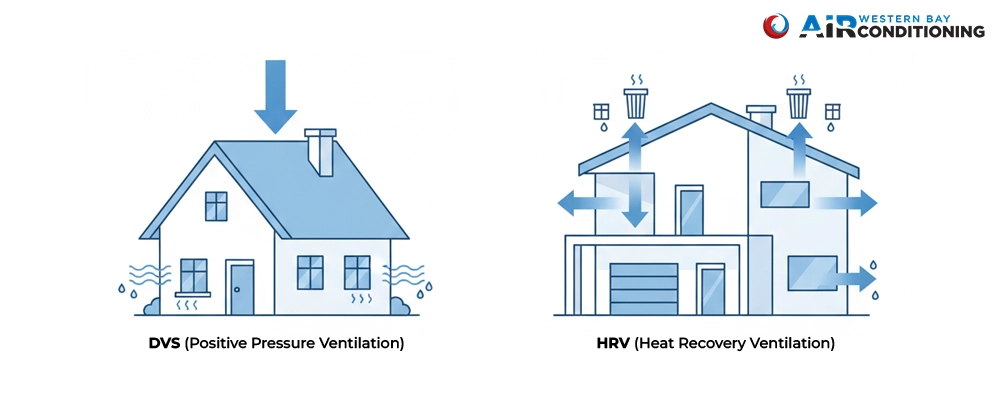
DVS (Positive Pressure) uses air from the roof cavity, filters it, and pushes it through ducts into your home. This fresh air pushes out damp air through natural leaks or vents.
HRV (Heat Recovery Ventilation) works similarly but includes a heat exchanger, which brings in fresh air while extracting moisture-laden air and recovering heat from the outgoing air to warm incoming air. This provides energy efficiency and temperature control.
Is One System Better for Homes with Dampness Problems?
Yes, dampness control depends on the home, and HRV can be a better fit for tighter homes or homes where roof-space air is not ideal.
DVS (Positive Pressure) works well in older, leaky homes, but it can struggle in modern airtight homes or homes with dusty or musty roof spaces.
HRV systems are better for controlling dampness in newer homes by introducing fresh, filtered air and extracting damp air while also recycling heat.
Make Your Home Healthier with the Right Ventilation System
Choosing between a DVS and HRV system depends on your home’s specific needs. While DVS is an affordable, simple solution for older, leaky homes, HRV offers energy efficiency and moisture control for modern, airtight homes.
Pressure Solutions can help guide you through the process of selecting the best ventilation system for your needs. If you’re not sure which system is best for you, contact us for a free, on-site consultation. We’ll assess your home and recommend the perfect ventilation solution.
FAQs
What’s the difference between a commercial and industrial water blaster?
We use “commercial” and “industrial” together and focus on matching the right water blaster to the size of the job and your budget. We supply everything from domestic high-pressure equipment to large trailer-mounted units. If you are unsure which category fits your requirements, our team can guide you.
Do you sell commercial water blasters in NZ?
Yes, we sell commercial and industrial water blasters in New Zealand. We import a wide range of pressure water blasters and offer NZ-wide shipping.
Which commercial water blaster is best for my business in NZ?
The best commercial water blaster depends on your job, budget, and how often you use the equipment. We can recommend petrol or electric units through to trailer-mounted setups, and we also custom-build solutions to suit specific business requirements.
WE SUPPLY & SERVICE ALL MAJOR BRANDS
GET IN TOUCH WITH US TODAY
A dedicated Bay local who knows a lot about hot air and cold. With 30 years’ experience in heating, air conditioning and ventilation he has the in-depth knowledge, skills and technical know-how to expertly manage your requirements.